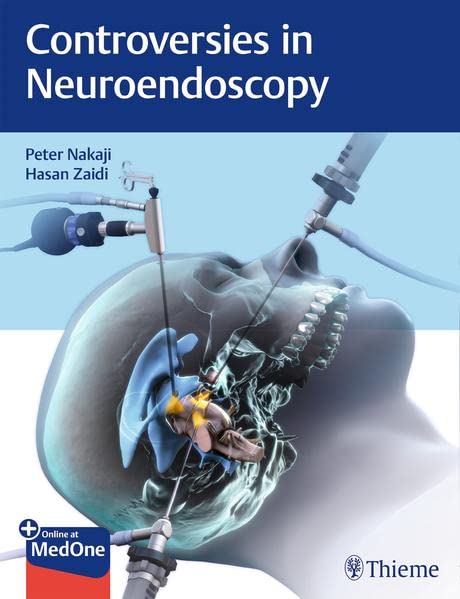
Controversies in neuroendoscopy / [edited by] Peter Nakaji, Hasan A. Zaidi.
Material type: TextPublisher: New York : Thieme, [2019]Description: 1 online resourceContent type:
 - text
- computer
- online resource
- 1626233551
- 9781626233553
- 617.4/810597 23
- RD593
- WL 141.5.N4
| Item type | Current library | Collection | Call number | Status | Date due | Barcode | Item holds | |
|---|---|---|---|---|---|---|---|---|
 eBook
eBook
|
e-Library | EBSCO Medical | Available |
Includes bibliographical references and index.
Machine generated contents note: -- Section A: Skull Base I. Pituitary-Tumor Surgery. II. Anterior Skull-Base TumorsIII. Craniovertebral Junction. Section B: Paraventricular Lesions. IV. Management of Colloid Cysts. Section C: Neurovascular. V. Decompression of Cranial Nerves. VI. Clipping of Cerebral Aneurysms. VII. Evacuation of Intraparenchymal Hemorrhage. VIII. Approaches to Brainstem Cavernous Malformations. Section D: Tumors. IX. Intraparenchymal Brain Tumors. Section E: Pediatrics. X. Craniosynostosis Surgery. Section F: Spine and Peripheral Nerves. XI. Cervical Discectomy/Foraminotomy. XII. Thoracic Discectomy. XIII. Endoscopic Versus Open Carpal Tunnel Release. Section G: Technology.
"A unique perspective on neuroendoscopic versus microsurgical techniques from world-renowned neurosurgeons. In the last two decades, neuroendoscopy has evolved from a fringe neurosurgical tool to an established subspecialty focusing on the treatment of diverse cranial and spinal diseases. Today, neuroendoscopic technology is widely used to treat supratentorial diseases, skull base pathologies, craniocervical diseases, and spinal pathologies. Despite the expanded use of neuroendoscopy across several subspecialties, its benefits and disadvantages versus those of traditional microsurgical methods remain highly controversial. Contradictory evidence in the neurosurgical literature adds to the surgical decision-making challenges for veteran and novice practitioners alike. Controversies in Neuroendoscopy by Peter Nakaji and Hasan Zaidi fills an unmet need for a book encompassing best practices, patient selection, and limitations and advantages of neuroendoscopic surgical approaches. Each case presents firsthand knowledge of internationally esteemed neurosurgeons, with a moderator, an endoscopic expert, and an expert in traditional microsurgical approaches. The unique discussion of neuroendoscopy versus microsurgery enables readers to compare the benefits and pitfalls of endoscopic and open microsurgical procedures for a wide range of conditions. In-depth comparative guidance on applications of the flexible endoscope, rigid endoscope, 3D endoscope, and high-definition 2D endoscope versus the microscope. A full spectrum of neurological conditions across the age continuum with comparative approaches for skull base surgery, pituitary surgery, hydrocephalus, spinal surgery, peripheral nerve surgery, and arachnoid cyst fenestration. Radiological imaging and intraoperative photographs enhance cases and provide precise, insightful technical guidance. High-quality color illustrations from the skilled medical illustrators at Barrow Neurological Institute reinforce key points and surgical techniques. Neurosurgery residents, neurosurgeons, and spine surgeons will all benefit from reading this remarkable book cover to cover, and they will no doubt use it as a go-to resource for specific cases"--Provided by publisher.
Description based on print version record and CIP data provided by publisher; resource not viewed.
Master record variable field(s) change: 650