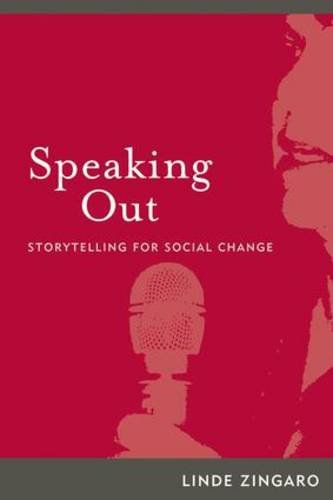
Speaking out [electronic resource] : storytelling for social change / Linde Zingaro.
Material type: TextSeries: International Institute for Qualitative Methodology seriesPublication details: Walnut Creek, Calif. : Left Coast Press, c2009.Description: 1 online resource (205 p.)ISBN:
 - 9781598747393 (electronic bk.)
- 1598747398 (electronic bk.)
- 808.5/43 22
- GR72.3 .Z56 2009eb
| Item type | Current library | Collection | Call number | Status | Date due | Barcode | Item holds | |
|---|---|---|---|---|---|---|---|---|
 eBook
eBook
|
e-Library | EBSCO Social Science | Available |
Includes bibliographical references and index.
Introduction: disclosure consequences -- Ideology, terminology, and method -- Conversations where silence is not consent -- Vignettes: professional confessions -- Voicing and silence: speaking for others by speaking about ourselves -- Preparation for speaking out: polishing the story -- Pedagogical confessions: narrating empowerment for knowledge production -- Testimony: performing the polished story -- Conclusions/closing: the portrait of a practice.
"Many professionals in health, education, and community service roles are caught in a particular identity bind - living in a complex social borderland of credibility and professional authority while experiencing or having experienced the same discrimination, violence and/or trauma they've committed their working lives to changing for others. For some, the disclosure of their own stories of marginalization has become a tool for advocacy, for telling a larger truth; for others, self-disclosure is a more personal action, intended to assist those isolated in their suffering in developing trust and connection. Linde Zingaro, a lifelong social service worker and activist, interviewed several colleagues who have chosen to speak out in this way, talking about their ethics and intentions, and collaborating to identify some of the risks for negative personal and professional consequences for the practioner. She uses their voices - and her own - to illustrate some of the ways that these people have learned to safely and effectively use the transformative potential of storytelling as significant social action. This examination of speaking out as a meaninful social practice may help other workers, activists, and community researchers in their efforts to be heard in the interests of a more just society."--BOOK JACKET.
Description based on print version record.