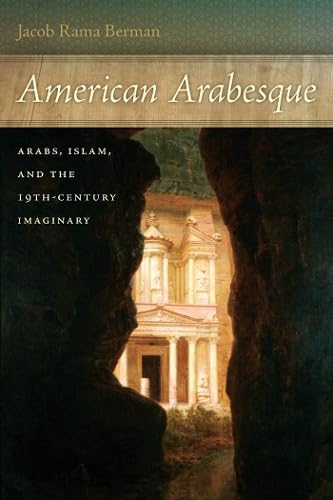
American arabesque : Arabs, Islam, and the 19th-century imaginary / Jacob Rama Berman.
Material type: TextSeries: America and the long 19th centuryPublication details: New York : New York University Press, ©2012.Description: 1 online resource (xvi, 269 pages) : illustrationsContent type:
 - text
- computer
- online resource
- 9780814789513
- 081478951X
- 9780814723210
- 0814723217
- American literature -- 19th century -- History and criticism
- Arabs in literature
- National characteristics, American, in literature
- Islam in literature
- Arabs -- Race identity
- National characteristics, American -- History -- 19th century
- Littérature américaine -- 19e siècle -- Histoire et critique
- Islam dans la littérature
- Arabes -- Identité ethnique
- Arabes dans la littérature
- LITERARY CRITICISM -- American -- General
- SOCIAL SCIENCE -- Anthropology -- Cultural
- Arabs -- Race identity
- American literature
- Arabs in literature
- Islam in literature
- National characteristics, American
- National characteristics, American, in literature
- Literatur
- Nationalcharakter Motiv
- Araber Motiv
- Islam Motiv
- USA
- 1800 - 1899
- 810.9/3529927 23
- PS217.A72 B47 2012eb
| Item type | Current library | Collection | Call number | Status | Date due | Barcode | Item holds | |
|---|---|---|---|---|---|---|---|---|
 eBook
eBook
|
e-Library | EBSCO Social Science | Available |
Includes bibliographical references and index.
Introduction: Guest Figures -- The Barbarous Voice of Democracy -- Pentimento Geographies -- Poe's Arabesque -- American Moors and the Barbaresque -- Arab Masquerade : Mahjar Identity Politics and Trans-nationalism -- Afterword: Haunted Houses.
American Arabesque examines representations of Arabs, Islam and the Near East in nineteenth-century American culture, arguing that these representations play a significant role in the development of American national identity over the century, revealing largely unexplored exchanges between these two cultural traditions that will alter how we understand them today. Moving from the period of America's engagement in the Barbary Wars through the Holy Land travel mania in the years of Jacksonian expansion and into the writings of romantics such as Edgar Allan Poe, the book argues that not only were Arabs and Muslims prominently featured in nineteenth-century literature, but that the differences writers established between figures such as Moors, Bedouins, Turks and Orientals provide proof of the transnational scope of domestic racial politics. Drawing on both English and Arabic language sources, Berman contends that the fluidity and instability of the term Arab as it appears in captivity narratives, travel narratives, imaginative literature, and ethnic literature simultaneously instantiate and undermine definitions of the American nation and American citizenship.
Print version record.
English.
Added to collection customer.56279.3