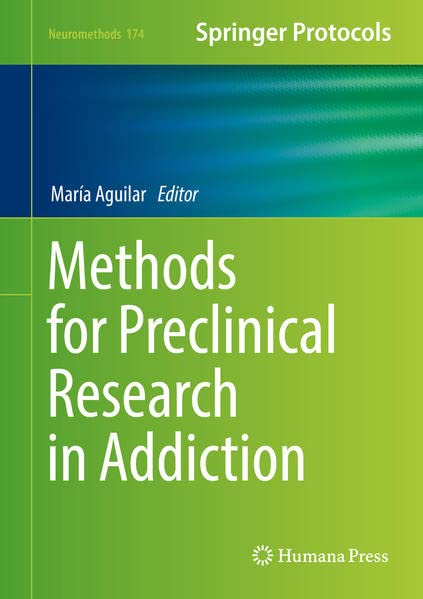
Methods for preclinical research in addiction / edited by María A. Aguilar.
Material type: TextSeries: Neuromethods ; 174. | Springer protocols (Series)Publisher: New York : Humana Press, [2022]Description: 1 online resource (1 PDF file (xv, 333 pages)) : illustrations (chiefly color)Content type:
 - text
- computer
- online resource
- 9781071617489
- 1071617486
- Compulsive behavior -- Research -- Methodology
- Compulsive behavior -- Animal models
- Compulsive behavior
- Neurosciences
- Diseases -- Animal models
- Behavior, Addictive
- Substance-Related Disorders
- Research Design
- Disease Models, Animal
- Addiction Medicine -- methods
- Neurosciences
- Comportement compulsif -- Recherche -- Méthodologie
- Comportement compulsif -- Modèles animaux
- Comportement compulsif
- Neurosciences
- Maladies -- Modèles animaux
- addiction
- Compulsive behavior
- Neurosciences
- 616.86027 23
- RC533 .M48 2022
- W1
- WM 176
| Item type | Current library | Collection | Call number | Status | Date due | Barcode | Item holds | |
|---|---|---|---|---|---|---|---|---|
 eBook
eBook
|
e-Library | eBook Protocols | Available |
Includes bibliographical references and index.
Influence of Sex on the Effects of Nicotine and Other Drugs of Abuse on Intracranial Self-Stimulation -- Animal Models of Adolescent Binge Drinking -- Prepulse Inhibition and Vulnerability to Cocaine Addiction -- Modulation of the Effects of Alcohol, Cannabinoids, and Psychostimulants by the Novelty-Seeking Trait -- Cognitive Biases Associated with Vulnerability to the Development of Pathological Gambling -- Extended Drug Access and Escalation of Drug-Self Administration -- Preclinical Models of Relapse to Psychostimulants Induced by Environmental Stimuli -- Influence of Social Defeat Stress on the Rewarding Effects of Drugs of Abuse -- Environmental Enrichment and the Effects on Drug Abuse Vulnerability: The Last Ten Years -- Investigation of Individual Differences in Stress Susceptibility and Drug-Seeking in an Animal Model of SUD/PTSD Comorbidity -- Working and Reference Memory Impairments Induced by Passive Chronic Cocaine Administration in Mice -- Transcranial Direct Current Stimulation to Reduce Addiction-Related Behaviors in Mice -- Manipulating Reconsolidation to Erase Drug Memory.
This volume presents a wide array of animal models that are used in the study of the individual and environmental factors involved in the development of addiction, the consequences of chronic drug exposure, and recently developed behavioral and biological procedures for the treatment of addictive disorders. The chapters in this book are organized into three sections that cover the aforementioned aspects in relation to different drugs of abuse and pathological gambling. The first section of the book focuses on the individual variables that affect vulnerability to addiction to nicotine, alcohol, cocaine, psychostimulants, and gambling. Section Two looks at the environmental variables that contribute to the vulnerability to addiction. Section Three explores the consequences of chronic drug consumption and new approaches to the treatment of addiction. In the Neuromethods series style, chapters include the kind of detail and key advice from the specialists needed to get successful results in your laboratory. Cutting-edge and comprehensive, Methods for Preclinical Research in Addiction is a valuable resource that helps researchers and scientists understand the neurobiological mechanisms that underlie the influence of individual and environmental variables on the risk for addiction, and assists them in developing new behavioral and pharmacological strategies to prevent and treat addictive disorders.
Description based on online resource; title from PDF title page (SpringerLink, viewed July 11, 2022).